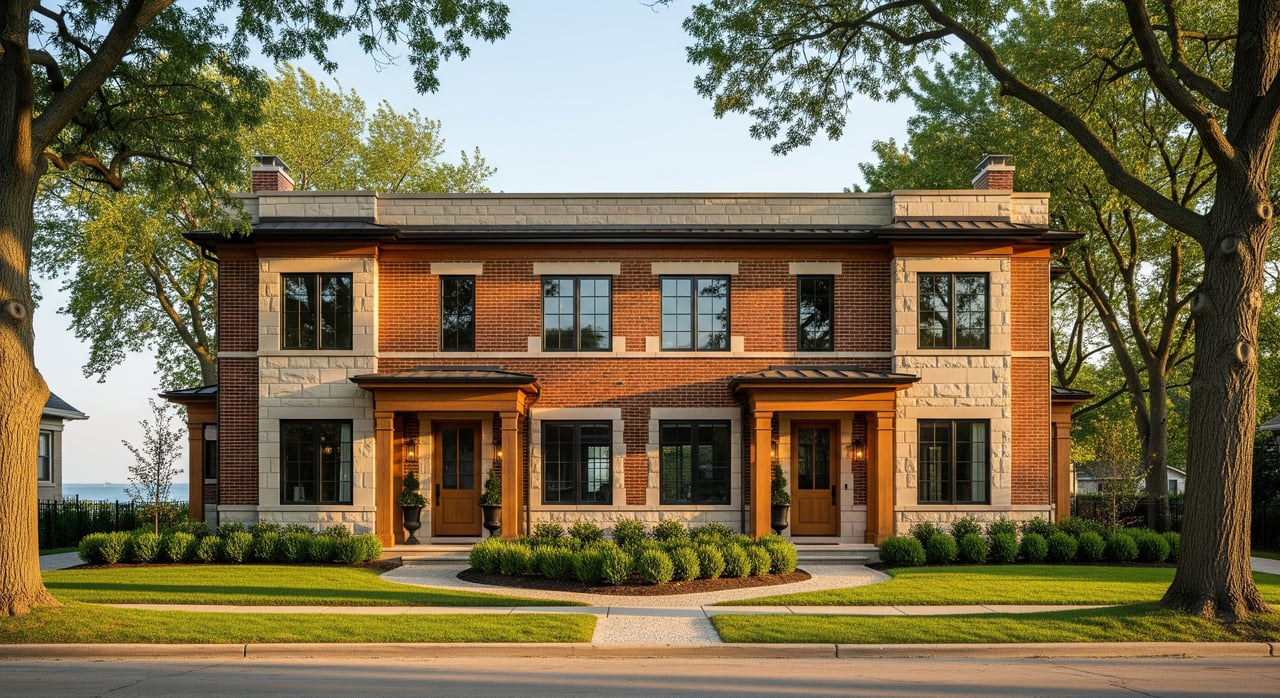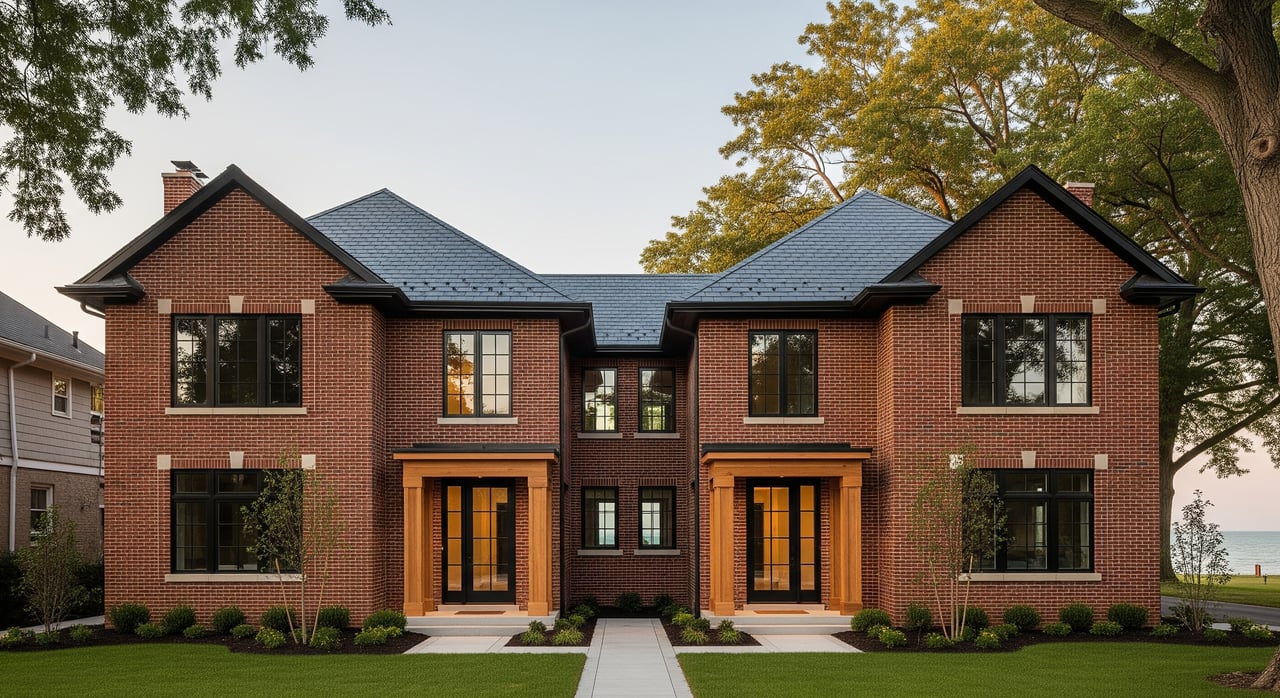
What if your neighbor paid a big part of your mortgage? House hacking a duplex in Hammond or Gary lets you live in one unit while your tenant helps cover costs. If you are trying to lower monthly housing expenses and build equity faster, this strategy can be a smart path. In this guide, you will learn how to underwrite a duplex in Lake County, compare financing, check local rules, and calculate ROI with simple formulas you can reuse. Let’s dive in.
House hacking basics in Lake County
When you house hack, you buy a two-unit property, live in one side, and rent the other. Your rent income reduces your housing payment and can speed up savings. In Hammond and Gary, small multifamily options are common, but they vary by block and age of the home. Success comes from accurate local rent comps, realistic expenses, and a property that meets zoning and habitability rules.
Check local rents and comps
Before you fall in love with a property, validate what the rental unit can earn.
- Focus on the property’s block or census tract, not citywide averages. Rents can change within a few streets.
- Compare unit types. A 1-bedroom and a 2-bedroom will command different rents even in the same building.
- Consider vacancy and seasonality. Lake County demand can fluctuate with regional employment and commuting patterns to Chicago via the I-80/I-94 corridor.
- Pull recent duplex sales nearby. Note price per unit and any rent roll details shared in listings.
Tip: Cross-check advertised asking rents with signed lease data when available. If a seller provides rent numbers, ask for current leases and payment history.
Financing options for owner-occupants
Your loan choice sets your down payment, underwriting rules, and monthly cost.
FHA for 2-unit homes
- FHA typically allows as little as 3.5% down for qualified borrowers on a 2-unit owner-occupied purchase.
- You must occupy one unit as your primary residence, generally within 60 days.
- FHA county loan limits vary. Check Lake County limits using the official HUD mortgage limits lookup.
- Mortgage insurance will apply and affects your monthly payment and ROI.
Conventional loans
- Conventional options can finance 2–4 unit owner-occupied homes with different down payment minimums based on the product and your profile.
- Programs like HomeReady or Home Possible may offer lower down payments for eligible borrowers.
- Many lenders will consider a portion of projected rental income for qualifying. A common approach is counting up to 75% of expected rent, but rules vary.
VA loans
- If you are eligible, VA loans can allow 0% down on 2–4 unit owner-occupied properties, subject to entitlement and occupancy rules.
- Even with zero down, plan for reserves and closing costs to protect your cash flow.
Other options
- Some buyers use local portfolio loans or seller financing for properties that need work or do not fit standard guidelines.
- Lenders often require cash reserves for multi-unit purchases. Ask your loan officer about reserve requirements and how rental income is treated.
Action step: Speak with at least one local lender experienced in 2-unit owner-occupied loans in Lake County and verify current limits, rates, and reserve requirements.
Zoning, permits, and landlord rules
Before you offer, confirm the property is legally a two-family dwelling and compliant with local rules.
Confirm legal duplex status
- A building used as two units is not always legally recognized as a duplex. Verify zoning and prior permits.
- Check local records for past renovations and any open code violations.
For Hammond-specific questions, contact the City of Hammond Building and Inspections. For Gary properties, start with the City of Gary Building Department.
Rental registration and inspections
- Some municipalities require rental registration or routine inspections for rentals. Ask about fees, inspection schedules, and occupancy certificates if required.
- If you plan to convert a single-family home into a duplex, expect requirements for separate egress, compliant electrical and plumbing, smoke detectors, egress windows, and possibly additional parking.
Landlord-tenant law and eviction basics
- Indiana state law governs deposits, notices, and eviction procedures. Local courts handle filings and timelines. Review current statutes on the Indiana General Assembly’s Indiana Code.
- For process details, consult a local real estate attorney or landlord association.
Habitability standards
- You must provide heat, hot water, safe electrical systems, working locks, and structurally sound conditions.
- Keep records of maintenance and repairs to demonstrate ongoing compliance.
Taxes, insurance, and operating costs
Your pro forma should include every recurring expense that reduces cash flow.
- Property taxes: Pull the current bill from Lake County records for the exact parcel. Taxes vary by neighborhood and can change with reassessment.
- Income taxes: Rental income is taxable, but depreciation and allowable expenses reduce taxable income. For guidance, visit the Indiana Department of Revenue and speak with a CPA.
- Insurance: Owner-occupied duplex coverage differs from pure landlord policies. Disclose that you will occupy one unit and ask about liability limits and loss-of-rent options.
Budget guidelines to start your underwriting:
- Vacancy allowance: 5% to 10% of gross rent, adjusted to the neighborhood.
- Maintenance and repairs: 1% to 3% of property value per year, higher for older homes.
- Property management: 8% to 12% of collected rent if you do not self-manage.
- Capital expenditures: Plan $300 to $1,500 per unit per year for big-ticket items like roof, HVAC, or windows.
ROI metrics you can use
These simple formulas help you compare options apples-to-apples.
- Gross Scheduled Income (GSI) = Sum of all potential rents.
- Effective Gross Income (EGI) = GSI − Vacancy allowance + Other income.
- Net Operating Income (NOI) = EGI − Operating expenses. Do not include mortgage payments.
- Capitalization Rate (Cap Rate) = NOI ÷ Purchase price.
- Cash-on-Cash Return = Annual pre-tax cash flow ÷ Cash invested. Cash invested includes down payment, closing costs, and initial rehab.
- Debt Service Coverage Ratio (DSCR) = NOI ÷ Annual debt service.
- Gross Rent Multiplier (GRM) = Purchase price ÷ Annual gross rent.
Sample ROI for a Hammond/Gary duplex
This example is for illustration. Replace with your property’s rents, actual tax bill, insurance quote, and lender terms.
- Purchase price: $150,000
- Monthly rents: Unit A $900, Unit B $800
- Annual GSI: ($900 + $800) × 12 = $20,400
- Vacancy allowance (8%): $1,632
- EGI: $20,400 − $1,632 = $18,768
- Operating expenses (annual estimate): taxes $2,400 + insurance $900 + maintenance $1,500 + utilities $600 + management 10% of rent $2,040 = $7,440
- NOI: $18,768 − $7,440 = $11,328
- Cap rate: $11,328 ÷ $150,000 = 7.55%
- Mortgage example: 25% down ($37,500), loan $112,500 at 6% for 30 years → annual debt service ≈ $8,070
- Pre-tax cash flow: $11,328 − $8,070 = $3,258
- Cash invested: $37,500 down + $3,000 closing + $10,000 initial rehab = $50,500
- Cash-on-Cash: $3,258 ÷ $50,500 ≈ 6.45%
Sensitivity check
Small changes can move your return. Test your numbers by adjusting the variables below.
- Rents: Change by ±$50 to ±$150 per month per unit.
- Vacancy: Test 5%, 8%, and 12%.
- Interest rate: Test your lender’s base rate and a +1% scenario.
- Unexpected repairs: Add a one-time $3,000 to $8,000 and see the impact on Year 1.
Due diligence for older duplexes
Many Lake County homes were built before 1978. Expect age-related issues and budget accordingly.
- Title and liens: Confirm clear title, easements, and any recorded code violations.
- Legal two-unit status: Verify with the city that the property is permitted as a duplex.
- Utilities and meters: Note whether gas, electric, and water are separately metered. If not, decide how to handle utility billing.
- Full inspection: Foundation, roof, HVAC, plumbing, and electrical. Ask your inspector to flag any outdated wiring, undersized panels, or aging furnaces and water heaters.
- Environmental risks: For pre-1978 properties, evaluate lead-based paint risks. Consider asbestos checks where relevant.
- Safety items: Smoke and carbon monoxide detectors, egress windows, handrails, and secure locks.
- Unit separation: Check for separate entrances, soundproofing, and secure deadbolts.
- Rental documentation: If the property is tenant-occupied, collect leases and verify payment history.
- Permit history: Request copies of permits for any major work and confirm final inspections are closed.
- Insurance and lending: Confirm that your insurer and lender accept the current configuration.
- Neighborhood context: Review crime data and access to transit, shopping, and employment centers.
Rehab and utility tips that boost ROI
- Prioritize safety and code. Electrical, plumbing, structure, and egress come first because they can impact occupancy approvals.
- Plan for efficiency. High-efficiency HVAC, programmable thermostats, and weatherization can reduce utility costs and improve tenant comfort.
- Consider separate meters. If practical, separate gas and electric to simplify billing and encourage conservation.
- Budget realistically. Get 2 to 3 contractor bids for immediate repairs and any value-add upgrades.
Neighborhood and safety checks
Hammond and Gary have micro-markets that vary by block. Avoid generalizations and review hard data.
- Review local police reports and the FBI Crime Data Explorer for broader patterns.
- Walk the block at different times of day, observe parking, and note proximity to major roads and transit.
- Ask your agent for rent and days-on-market patterns for similar 2-unit properties nearby.
Next steps and local resources
- Pull the current tax bill and assessed value for the specific parcel through Lake County’s records.
- Check Lake County FHA loan limits on the HUD mortgage limits lookup.
- Confirm legal two-unit status, permits, and any rental registration with the City of Hammond Building and Inspections or the City of Gary Building Department.
- Review landlord-tenant statutes on the Indiana Code and discuss procedures with a local attorney.
- Get insurance quotes for an owner-occupied duplex and compare coverage options.
- For tax planning on rental income and deductions, visit the Indiana Department of Revenue and consult a CPA.
- For neighborhood context, include a pass through the FBI Crime Data Explorer.
At Favela Real Estate, you get a team that understands both the numbers and the construction. With our renovation arm, we can help you evaluate needed repairs, scope a realistic budget, and line up value-add upgrades that support your rent targets. Ready to run the numbers on a Hammond or Gary duplex and see if house hacking fits your goals? Reach out to Favela Real Estate to start your plan today.
FAQs
Can I use an FHA loan to buy a duplex in Hammond?
- Yes, FHA generally allows owner-occupied 2-unit purchases with a low down payment, county-specific loan limits, and occupancy requirements; verify limits through HUD and lender rules.
How much down payment do I need for a duplex in Lake County?
- It depends on the loan: FHA is often about 3.5% for qualified buyers, conventional ranges from roughly 3% to 25% depending on the program, and VA may allow 0% for eligible veterans.
How do I estimate my duplex profit in Hammond or Gary?
- Use the templates here: project GSI, subtract vacancy to get EGI, subtract operating expenses for NOI, then calculate cap rate and cash-on-cash with your actual taxes, insurance, and loan terms.
What are the biggest risks when house hacking locally?
- Common risks include unexpected repairs, longer-than-expected vacancies, rents below your initial assumptions, local code violations discovered after closing, and financing issues if projected rents were overstated.
Should I self-manage my Hammond or Gary duplex?
- Self-managing saves an 8% to 12% fee but requires time and knowledge; a property manager can help if you prefer a hands-off approach or live off-site, but the fee reduces net cash flow.